
The November 17 announcement is scheduled for noon Eastern, while the official rules explain why nominations and winners involve different stages.
The Game Awards will reveal its 2026 nominees today, November 17, at noon Eastern, 9 a.m. Pacific and 5 p.m. GMT, according to the event’s official website. For Central Time readers, that is 11 a.m. This feature was prepared before the reveal and does not contain an announced nominee list. The immediate news is the scheduled special, with the annual ceremony set for December 10 at the Peacock Theater in Los Angeles.
Keeping those two events separate is essential. Today’s announcement identifies the field; December’s show presents the awards and other programming. The official FAQ says the ceremony’s opening act begins at 7:30 p.m. Eastern on December 10. A reader planning to watch should therefore avoid confusing the relatively short nominations appointment with the main broadcast. Both belong to the same awards cycle, but they answer different questions and arrive at different points in it.
What the published process says
The Game Awards’ FAQ describes an international jury of more than 100 media and influencer outlets for most nominations, with specialized juries for certain fields. It says voting outlets submit unranked selections and that ties can expand a category beyond five nominees. The organization also states that producer Geoff Keighley and the advisory board do not vote in that process. These are the event’s own descriptions of its procedure, not an independent audit of the ballots.
The FAQ gives most winners a blended result of 90 percent jury voting and 10 percent public voting. It separately discusses Players’ Voice and different release eligibility dates. Those distinctions make it unwise to treat every award as a single popularity poll. For readers seeking the full operational detail, the official rules are the primary reference. This article summarizes the broad structure rather than reproducing the rulebook or claiming access to private voting records.
Analysis: a nomination list is a selection, not a complete history
Every annual shortlist has limits. Games vary in length, audience, platform and the time required to understand what they do well. A nomination can bring welcome attention to a work without making the omissions meaningless. Conversely, a game can matter deeply to its players without appearing in a headline category. Readers can take the list seriously while recognizing that no small selection can stand in for every worthwhile release.
This is particularly relevant when the public conversation centers on one top award. A game’s writing, sound, accessibility or ongoing support may deserve discussion even when it is absent from the largest category. The categories offer several ways to notice craft. Following only the race for the final trophy can miss the people and disciplines that make a game feel distinctive in the first place.
The useful question after the reveal is therefore broader than who was left out. What does each nomination ask us to notice? A performance nomination may direct attention to a particular character or actor. A technical category may highlight work that disappears into a smooth experience when it succeeds. These are opportunities to learn how a game was made, rather than simply compile a ranking of titles already familiar to the loudest audience.
Why eligibility and release timing need careful reading
The official FAQ places the standard commercial-availability deadline at November 20, 2026, at 9 p.m. Pacific and gives Players’ Voice a later November 30 cutoff. The fact that a nomination announcement precedes the standard deadline can look confusing without that context. Eligibility is a rule about which work can be considered; the announcement is a scheduled public event. The dates should be reported as published rather than replaced with an invented explanation of how every outlet handled access.
An eligibility rule also does not predict a nomination. A title can qualify without appearing, just as a late release does not automatically receive less or more recognition. Specific claims about review access, ballot timing or a publisher’s strategy need direct evidence. This feature does not nominate a game on the organizers’ behalf, infer a result from a release calendar or present a predicted shortlist as confirmed news.
The same caution applies to ongoing games, expansions and remakes. The rules allow consideration of several kinds of release, but permission to consider them is not the same as a conclusion about their merit. Once the nominees are known, readers can examine the precise category and the work being recognized. That is more informative than assuming every title on a list represents the same production scope or the same kind of new material.
Analysis: public voting can be participation without becoming a purchase
Fans who want to vote should begin with the official event site and read the current instructions. There is no reason to treat voting as an obligation to buy or finish every nominated game before expressing an opinion. A more useful response is to be honest about what one has played and curious about what remains unfamiliar. The shortlist can become a reading and playing guide without turning into a hurried spending plan.
It is also possible to discuss a category without claiming an objective verdict. Someone may prefer a compact experience that accomplishes one idea precisely, while another values a sprawling system that rewards experimentation. Those preferences can be explained through examples from the games themselves. Reducing the discussion to sales totals or social-media volume would leave out the actual qualities the categories are meant to bring into focus.
Awards coverage is strongest when it follows the creative work after the reveal. Interviews about a soundscape, an interface or a performance can tell readers more than repeated speculation about the leading contender. A nomination supplies a timely reason to ask those questions. It does not answer them automatically. The best follow-up reporting will connect the recognition to specific, attributable decisions rather than assume that a trophy category explains a game’s entire achievement.
The next verified step
For now, today’s scheduled reveal is the next concrete event. Readers can consult TheGameAwards.com for the live announcement and, afterward, the official nominee list. Any preview published before noon Eastern should be updated before it is described as a results report. That is especially important for a draft prepared early in the day, when a schedule can become old information within hours even though the ceremony itself remains weeks away.
The November 17 special begins the public shortlist conversation; December 10 will resolve the awards. Between those dates lies the useful part for players: discovering work they missed, understanding what different categories recognize and discussing the games through their actual design. The nominees will provide a starting point. The most worthwhile response is to turn that attention back toward the people, choices and experiences that the games contain.
Sources and reporting credit
The Game Awards | Official reveal schedule | accessed November 17 2026
The Game Awards | Official FAQ and rules | accessed November 17 2026
Insider Gaming | Reveal timing report | November 13 2026
HUDWire | Dates and eligibility explainer | November 13 2026
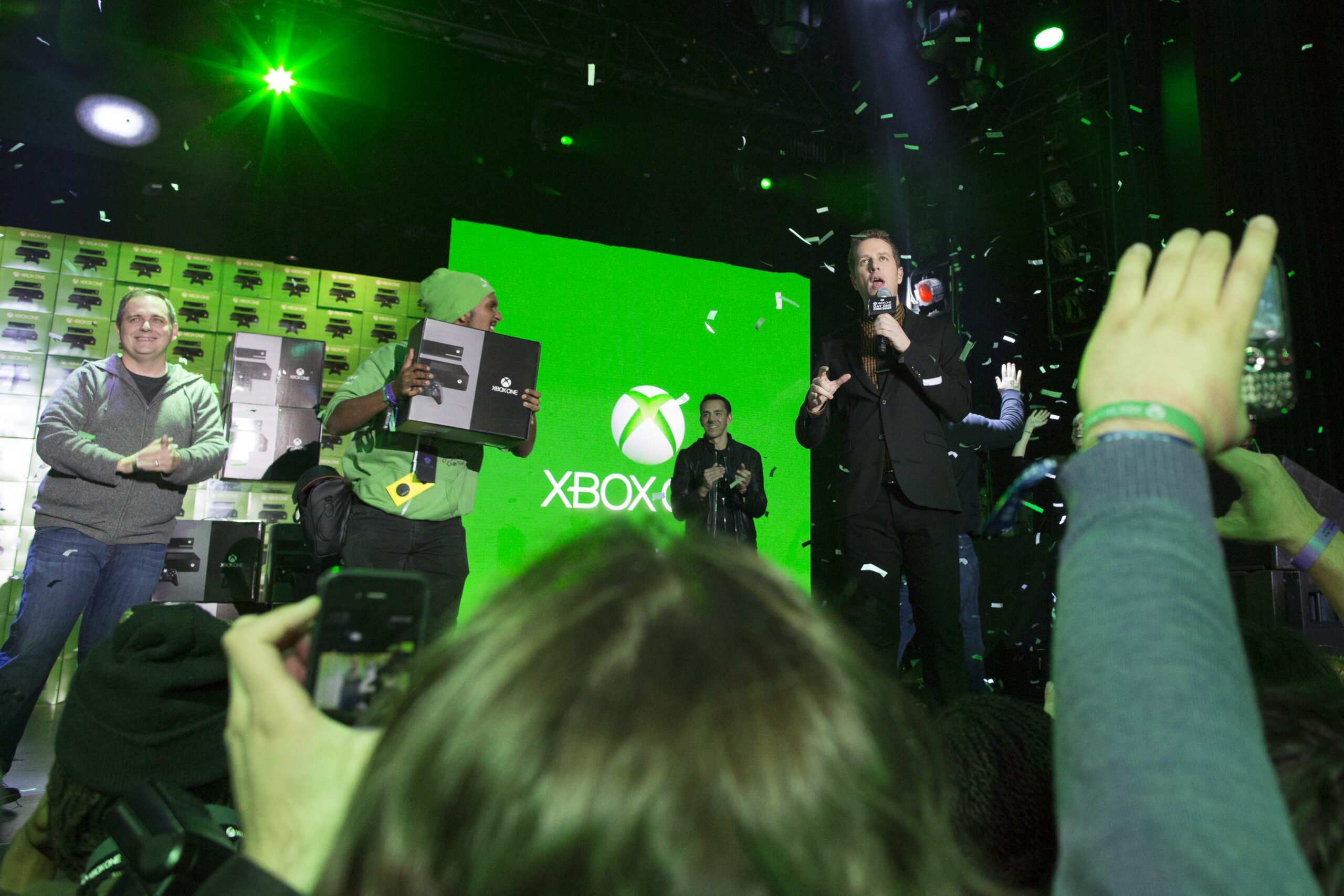
Featured image: Geoff Keighley in 2013; archival portrait. Photo: Dean Takahashi, source, CC BY-SA 4.0. No new edits. Commons VRT permission ticket 2021041310009214.


