
The Country Music Association has filled in another part of tonight’s CMA Awards lineup, announcing presenters and special guests on November 17 ahead of the ceremony at Nashville’s Bridgestone Arena. Lainey Wilson hosts the 60th annual show, with the live Eastern and Central broadcast beginning at 8 p.m. Eastern and 7 p.m. Central on November 18. The new announcement broadens the evening beyond its previously revealed musical performances. [1]
Among the announced presenters are Vince Gill, Little Big Town, Martina McBride, Carly Pearce, Darius Rucker, Michael Bublé, Jessica Chastain and Glen Powell. CeCe Winans and Lee Ann Womack are also on the list. A presenting credit identifies a role in the ceremony; it should not be treated as a promise of an unannounced performance. The distinction is useful for viewers assembling expectations from a long list of recognizable names. [1]
The latest additions give the broadcast a wider cast
CMA’s release also identifies special appearances by Clint Black, Luke Bryan, Lady A, Leanne Morgan, Matt Rife and Lara Spencer. The announcement gives the production a mix of established country performers and figures from television, film and comedy. It does not disclose every pairing, introduction or on-stage exchange. Those are still part of the live show’s arrangement rather than details that can be reconstructed from the guest list alone. [1]
Presenters are easy to overlook in a preview dominated by musical numbers, but they help determine a ceremony’s pace. An introduction can reset the room after a large performance, give an award its context or connect viewers with a different part of the music community. The challenge is economy. A short moment needs enough personality to feel live while leaving space for the people and work being recognized.
The range of guests also creates opportunities for different generations to share the same broadcast. A viewer may tune in for a current nominee and encounter someone whose recordings belong to an earlier chapter of country music. Another may recognize a guest from a film and stay for an artist they have not heard before. That is one of the useful functions of a televised awards show: it can create adjacent encounters that a personalized playlist would not necessarily arrange.
Tributes and collaborations have distinct purposes
The official performers page lists a tribute to Dolly Parton and a Brooks & Dunn celebration involving Brothers Osborne, HARDY, Luke Bryan, Marcus King and Halestorm. Brooks & Dunn are identified as this year’s recipients of the CMA Willie Nelson Lifetime Achievement Award. Those segments connect the current ceremony with longer careers, giving the broadcast a reason to look backward while still presenting music through the performers on stage tonight. [2]
The same page lists collaborations between Mumford & Sons and Chris Stapleton, and between Stephen Wilson Jr. and Stapleton. Other announced performers include Ella Langley, Kacey Musgraves, Wilson, Luke Combs, Megan Moroney, Miranda Lambert, the Red Clay Strays, Taylor Swift and Tim McGraw. The lineup confirms the artists’ participation, not an exact sequence of songs or a complete running order. A preview should leave that difference intact. [2]
A tribute has a different dramatic job from a current single. It needs to make a career recognizable in a limited amount of time. The most effective arrangement may focus on one quality rather than trying to summarize everything: a vocal approach, a songwriting idea or the way an artist’s work has traveled between audiences. A collection of familiar titles can be enjoyable, but a clear musical argument is what makes a tribute feel like more than a shortened playlist.
Collaborations offer another kind of discovery. Two artists can bring different phrasing, textures or rhythmic instincts to the same piece. The interest lies in how they listen and adjust to one another, not simply in placing two well-known names on one screen. That is a useful way to watch tonight’s announced pairings without assuming in advance that every combination will sound a particular way.
How to watch from Central time and elsewhere
CMA’s official viewing page lists 7 p.m. Central as the live start, alongside 8 p.m. Eastern. It gives separate local airtimes for other U.S. time zones, including 7 p.m. Mountain and 8 p.m. Pacific. Those listings should be read as the published local broadcast schedule rather than converted casually from the Eastern start. Viewers elsewhere should consult the official guide and their own provider for the relevant access details. [3]
The page identifies ABC and Disney+ for the broadcast and next-day viewing on Disney+ and Hulu. The November 17 press release also specifies the three-hour Eastern broadcast window, from 8 to 11 p.m. A next-day option is useful for someone unable to watch live, but it is different from following the ceremony as the awards are announced. Anyone avoiding results until a replay should expect entertainment coverage to discuss the winners soon after the live show. [1][3]
For Nashville-area readers, the timing is especially straightforward: the advertised live start is 7 p.m. Central tonight. The city supplies the physical setting, while the television production translates the arena into a sequence of performances, introductions and presentations. Watching at home is a different experience from being in the room, but the cameras can reveal details of musicians working together that would be harder to follow from a distant seat.
A milestone year invites perspective
The official CMA site frames this as the 60th annual ceremony and provides a history section alongside its current lineup. A milestone can make an awards broadcast feel like both a celebration of the present and a conversation with its own past. The useful question is how that history appears in the actual show: through an introduction, a song choice, a returning performer or the relationship between an established artist and a newer voice. [4]
An anniversary does not have to turn the evening into a museum piece. Music remains most persuasive when it is being performed, with the particular voice and arrangement in front of the audience. A historical reference can give that moment depth without replacing it. The strongest balance lets a viewer understand why an artist matters while still enjoying the sound being made now.
Awards results are another part of the evening, but they are not known in advance simply because the guest list is public. This preview does not predict winners or treat a performer’s presence as evidence of an outcome. A nomination, a scheduled appearance and an award are separate facts. The ceremony will provide the results, and subsequent coverage can assess them against the actual broadcast.
Tonight’s final lineup therefore offers several points of entry: Wilson’s hosting, the newly announced presenters, the tribute segments and the collaborative performances. The November 17 additions make the picture more complete without revealing every moment. With the live Central broadcast beginning at 7 p.m., the remaining question is the one a list of names cannot answer: how those different parts work together when the music starts in Nashville.
Sources and reporting credit
[1] Country Music Association | Presenters and special guests announcement. November 17, 2026.
[2] CMA Awards | Performers and presenters. Accessed November 18, 2026.
[3] CMA Awards | Official viewing guide. Accessed November 18, 2026.
[4] CMA Awards | Ceremony history timeline. Accessed November 18, 2026.
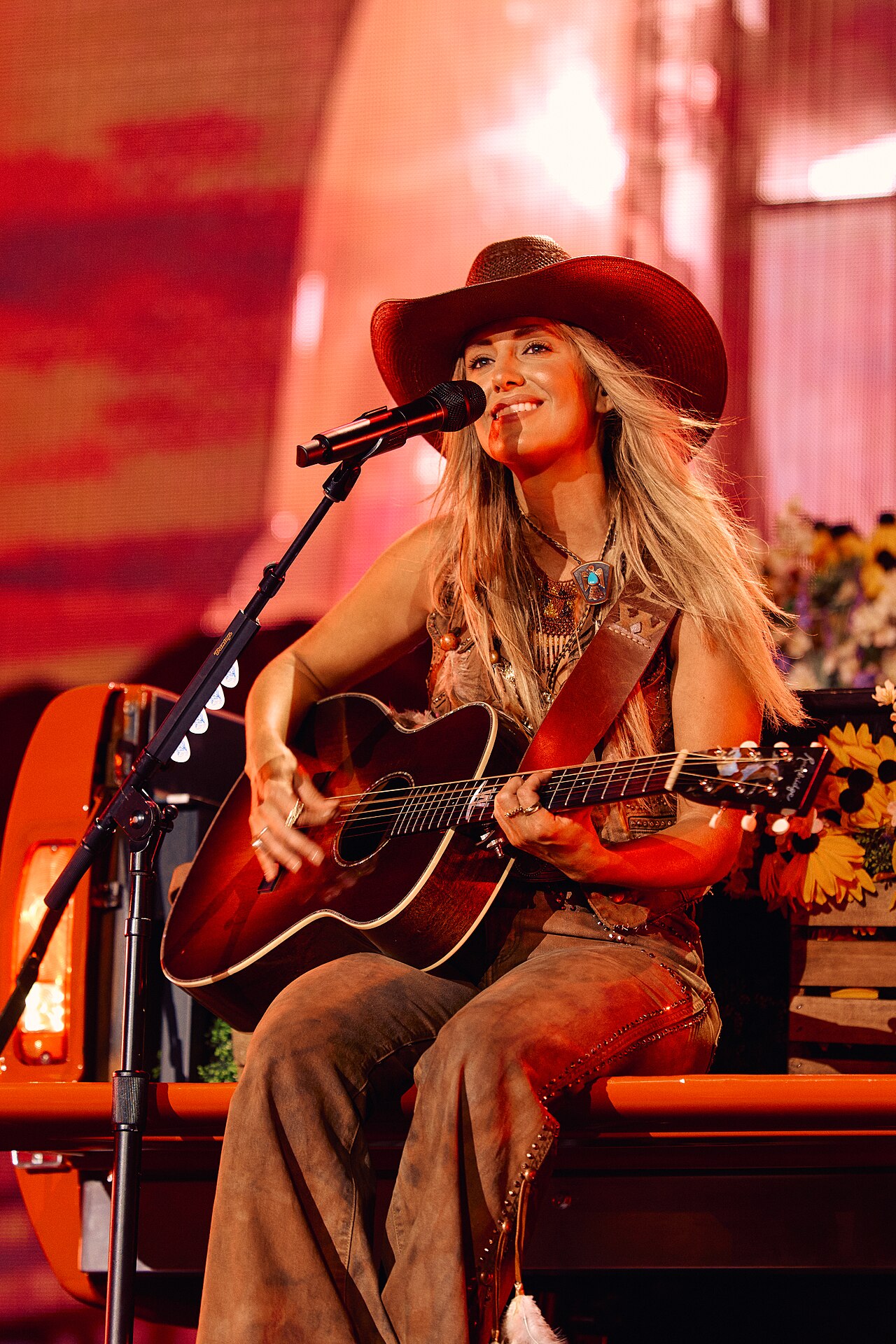
Featured image: Lainey Wilson performing in Oxford, Mississippi, in January 2020; archival photograph. Photo: Ben Childers. Source · CC BY-SA 4.0. Resized source version; no other edits.


