
Netflix’s November 17 preview brings returning characters and new recruits into focus ahead of a January 14 return.
Netflix has released a new teaser for the second season of 3 Body Problem, giving viewers a fresh look at the science-fiction drama before its January 14, 2027, return. The November 17 preview places humanity's preparations for an approaching alien civilization at the center of the campaign. This is a report on newly released promotional material, not a review of the season. Readers who have not finished the first season should note that the premise below reveals its broad central discovery. [1]
Keisha Hatchett's accompanying Netflix Tudum article includes comments from the show's creative team about that change in emphasis. Co-creator David Benioff describes an opening season driven by uncertainty and a second season in which the characters possess more information about the threat. That is the useful distinction supplied by the new material: the question is expanding from what is happening to what people can do with the knowledge they have gained. [1]
The preview establishes a new dramatic problem
The series is based on Cixin Liu's novels and is developed by Benioff, D.B. Weiss and Alexander Woo. The official preview identifies returning performers including Jovan Adepo, Liam Cunningham, Eiza González, Jess Hong and Benedict Wong. Its cast information gives viewers concrete continuity between seasons without requiring speculation about which characters will dominate the new episodes. Promotional prominence and final screen time are different measures, and neither should be inferred automatically from a few seconds of footage. [1]
TheWrap also covered the November 17 teaser, while TV Insider's Erin Maxwell had reported the January return and forthcoming preview on November 16. Read together, the two dates separate an advance notice from the release of the footage itself. A report saying that a teaser is coming is background to today's story; the new public sample is the material development. The earlier report should not be mistaken for evidence that the entire season has already become available. [2][3]
As narrative analysis, knowing more can make a science-fiction story harder rather than easier. An unexplained phenomenon creates immediate curiosity. Once the explanation arrives, the series has to convert that curiosity into decisions with consequences. Characters need objectives that can be understood within a scene, even when the larger problem spans extraordinary distances. Preparation becomes dramatic when it forces someone to choose among imperfect actions, not simply when a screen displays another impressive diagram.
That challenge is especially clear in a story involving an approaching civilization. Vast scale can produce awe, but it can also make individual actions seem insignificant. A television adaptation has to bridge those scales. A discussion in one room must feel connected to the larger threat without requiring constant reminders that the stakes are enormous. The value of recurring characters is that their changing judgments can supply that connection more effectively than abstract measurements alone.
New recruits can change an established ensemble
Netflix's cast announcement adds Claudia Doumit as Captain Van Rijn and Ellie de Lange as Ayla, alongside recurring performers Alfie Allen, David Yip and Jordan Sunshine. Those are confirmed casting details. The available material does not establish every character's full history, ultimate allegiance or eventual outcome, and this feature does not import later-book events into a report about the television preview. Readers can follow the adaptation's published casting without surrendering the surprises of its finished narrative. [4]
An expanding ensemble can serve several purposes. A new arrival can ask a question the existing characters have stopped asking, expose an assumption or place familiar expertise in a different setting. What matters is not simply the number of people added. It is whether each entrance changes the choices available within a scene. A lengthy cast list is evidence of participation, while a meaningful dramatic function has to be demonstrated by the episodes themselves.
For returning viewers, the original ensemble offers reference points. Someone who once had confidence may now hesitate; someone who was uncertain may have found a practical responsibility. Those are examples of what a continuation can explore, not claims about specific unseen scenes. The preview's emphasis on adaptation to new knowledge creates room for such development. It does not tell us exactly which character will carry each emotional or intellectual task.
The scientific dimension also needs care in coverage. A fictional series can invite viewers to think about scale, evidence and uncertainty without every dramatic device functioning as a literal lesson. Netflix links its preview to a science explainer featuring adviser Dr. Matt Kenzie. That is a useful companion for readers who want to separate the real conceptual questions from the narrative machinery. The presence of an adviser does not turn every imagined technology into an existing invention. [5]
What a teaser can actually demonstrate
A promotional montage is designed to move rapidly among ideas. Its selection of images, music and dialogue may suggest urgency without revealing the length or order of the scenes from which those pieces came. Viewers can observe the public material while resisting the temptation to build a complete episode sequence out of it. That restraint is especially valuable for an adaptation whose readers may recognize details that other viewers encounter for the first time.
The distinction between preview and review is more than a disclaimer. A season's effectiveness depends on how information is distributed over time. A startling image may work beautifully in a minute-long teaser and require careful preparation in an episode. Conversely, a quiet exchange absent from the trailer may become the season's most important scene. Public promotional footage establishes the campaign's emphasis; it cannot settle the quality of the completed dramatic arc.
The next season will also be judged by how well it makes complex ideas legible through people. An explanation can be accurate and still interrupt a scene if no character has a reason to deliver or question it. The strongest explanatory dialogue creates a change in understanding that affects the next action. That is a practical viewing criterion for science-fiction television, and it remains useful whether the viewer arrives with detailed knowledge of the books or none at all.
January provides the next firm milestone
January 14 is the confirmed return date attached to Netflix's new campaign. Today's development gives viewers something more substantial than a distant renewal notice: a public teaser, new images and comments explaining the broad shift in dramatic focus. It does not resolve the conflict, announce a winner or supply a complete account of the season's surprises. [1]
The series now has to turn knowledge into momentum. That is an intriguing challenge because information does not automatically create agreement, confidence or a workable plan. The new preview asks viewers to consider what comes after the first great revelation. The finished episodes will show whether the production can preserve the wonder of an enormous fictional problem while keeping the decisions of the people facing it clear, particular and worth following.
Sources and reporting credits
[1] Keisha Hatchett at Netflix Tudum. November 17 2026. 3 Body Problem Season 2 Teaser The San Ti Are Here
[2] TheWrap. November 17 2026. 3 Body Problem Season 2 Trailer Teases Earth Facing Extermination
[3] Erin Maxwell at TV Insider. November 16 2026. 3 Body Problem Season 2 Premiere Date Revealed
[4] Keisha Hatchett at Netflix Tudum. July 31 2025. 3 Body Problem Adds Two Full Time Three Recurring Cast Members for Season 2
[5] Netflix Tudum. background article accessed November 17 2026. What Is the 3 Body Problem The Shows Science Explained
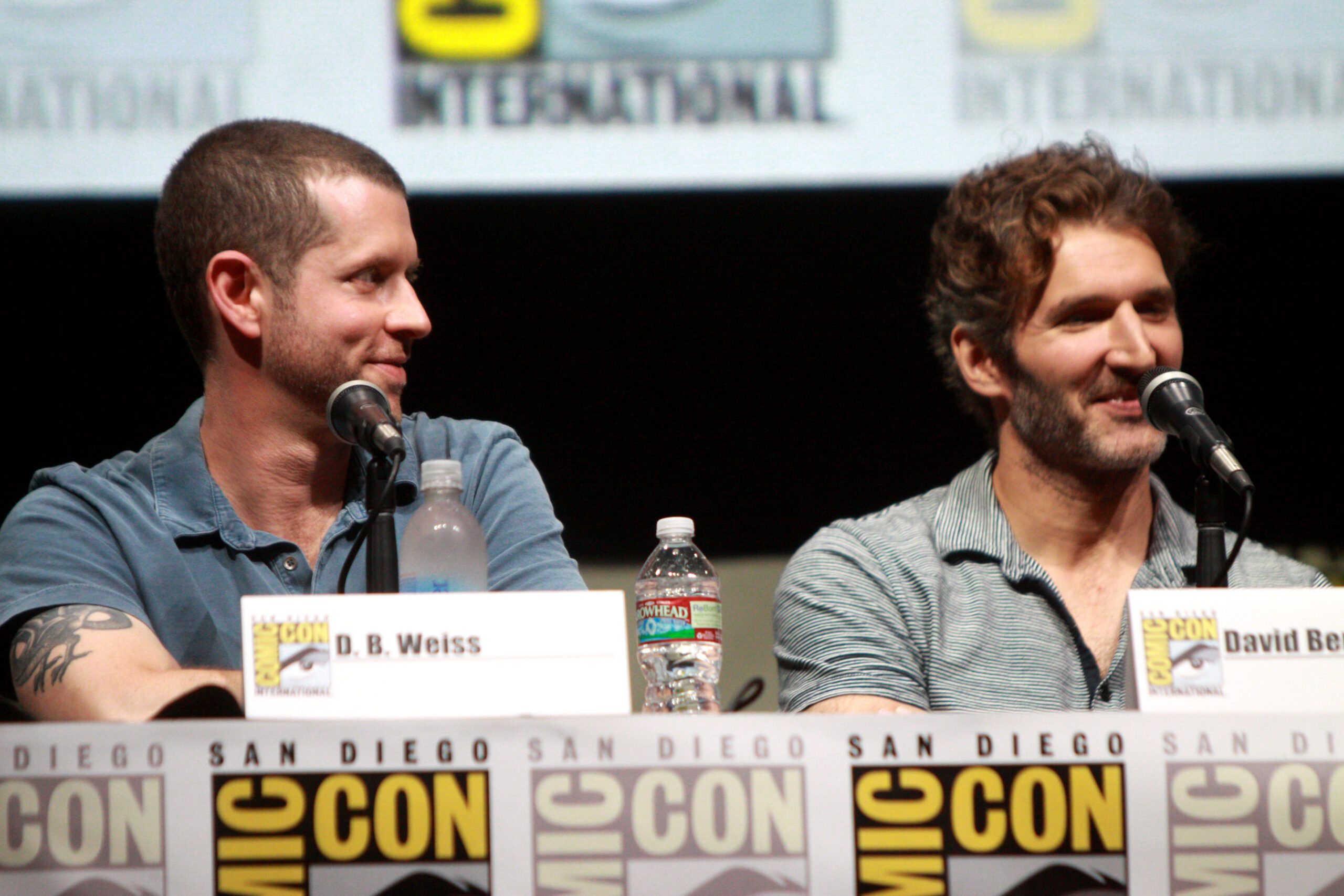
Featured image: David Benioff at San Diego Comic-Con in 2013. Archival creator portrait. Photo: Gage Skidmore, source, CC BY-SA 2.0. No new edits.


